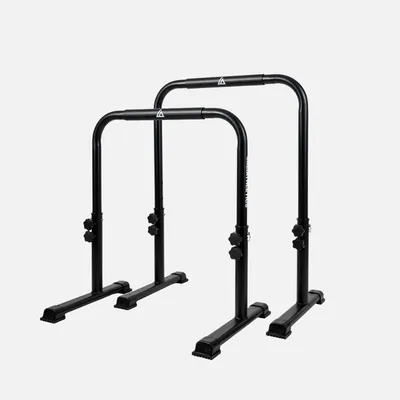
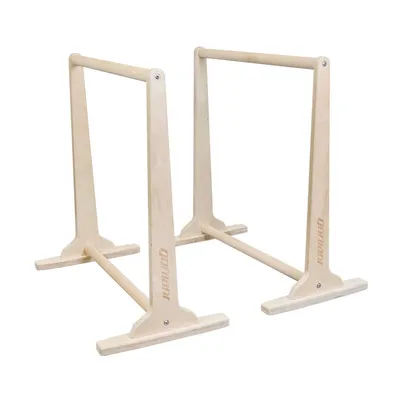
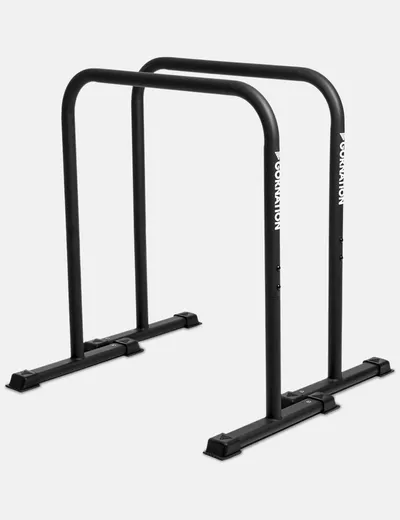
Height is the whole decision
Dips are unforgiving about height. Too low and you hit the floor before your shoulders reach depth, which quietly caps your range for months without you noticing. Too high and getting into position becomes a jump, which is a problem on a station that is not bolted down.
Measure from the floor to your armpit while standing, then subtract your leg bend. That number tells you which of these is yours. Both stations that publish a height sit at 90 cm, and Gorletic puts a ceiling on it: up to 1.80 m without your feet touching the ground. Above that you are tucking your legs, which is workable but changes the exercise.
What this page is
A comparison, not a ranking. We have not tested these stations, so what follows is what each brand publishes, checked against their official pages in September 2026, with the gaps left visible.
The dip bar guide covers the types and how they compare to parallettes and rings.
What adjusts, and what does not
None of these three adjusts in height. Two of them adjust in width, through a connecting piece between the bars, and that is a different thing that product pages often blur together.
Width matters: too wide loads the shoulder in the bottom position. But if you were hoping to raise the bar as you get taller or stronger, none of these do that, and a station sold as “adjustable” may only mean the width.
Dip bars, parallettes or rings
High parallettes cover dips and cost less, but they put your hands lower and closer together, so tall athletes run out of floor. Ring dips are harder, better for shoulder stability, and useless as a strength baseline while you are still fighting the rings.
A dedicated dip station is the right buy if dips are a main lift for you, if you add weight, or if you are tall enough that parallettes leave you tucked.
What to check before you buy
Height, against the number you measured above.
Grip diameter, which runs from 40 to 43 mm here. The wooden one is the thickest, which is more comfortable for some hands and more tiring for others.
The feet. A station that creeps forward a centimetre per set is a station you will stop trusting, and rubber across the full base beats four small pads.
The load rating, if you add weight. The published figures here run from 160 kg to 400 kg per bar, which is a far wider spread than the prices suggest. Your bodyweight plus a 40 kg belt adds up faster than it looks.
Full brand catalog in the brands directory.